

Keeping Humans in the Loop of AI Agents
Designing the review tools where analysts check what AI writes, and an AI-first way of designing them
8 min
From February to October 2026 I was a product designer at Liminal, a market intelligence platform for cybersecurity and digital identity. Its value rests on one promise: the data is right. When Liminal started using AI agents to research companies and draft its taxonomy, someone had to check their work before clients saw it. I designed the places where that happens: two review tools, each live in about five weeks. And I changed the way I design to keep up with how fast the team was building.
Industry
Market Intelligence, Cybersecurity & Digital Identity, B2B SaaS
Role
Product Designer
Project Duration
9 months (Feb–Oct 2026)
Focus
AI Product Design
Human-in-the-loop Workflows
Prompt-driven Prototyping
Design Systems
→ Context
Liminal maps who sells what to whom in fraud, identity and security. A team of analysts keeps thousands of company profiles and a taxonomy of use cases current, and paying clients make decisions on top of it. In 2026 two AI agents joined that work: Magellan, which researches company profiles, and Atlas, which drafts use cases.
→ Challenge
The agents could write. What the team lacked was one place to check their work. Requests came in through three channels, reviews lived in spreadsheets and PDFs, and content was re-typed from the agent's dashboard to a Google Doc to Airtable before it reached the product. Editing a published use case even wiped its product tags.
Wrong data reaches paying clients. The review loop had to be strict enough to protect trust (who can publish, what needs a reason, what gets logged) and light enough that a small, remote team would actually move to it. The timeline was weeks, not quarters.
Wrong data reaches paying clients. The review loop had to be strict enough to protect trust (who can publish, what needs a reason, what gets logged) and light enough that a small, remote team would actually move to it. The timeline was weeks, not quarters.
→ Discovery & Insight
Before designing a screen, I mapped who uses Liminal's back office and why it kept sprawling: 34 staging screens, 40 navigation rows, no rule for where a new screen goes. A navigation workshop with daily users changed the question. They didn't need a new menu. They needed an audit trail and a real QA step for AI output.
That became the brief for two focused tools instead of one big redesign.
That became the brief for two focused tools instead of one big redesign.
“The prototype is the spec.”
→ Magellan: review every change the agent proposes
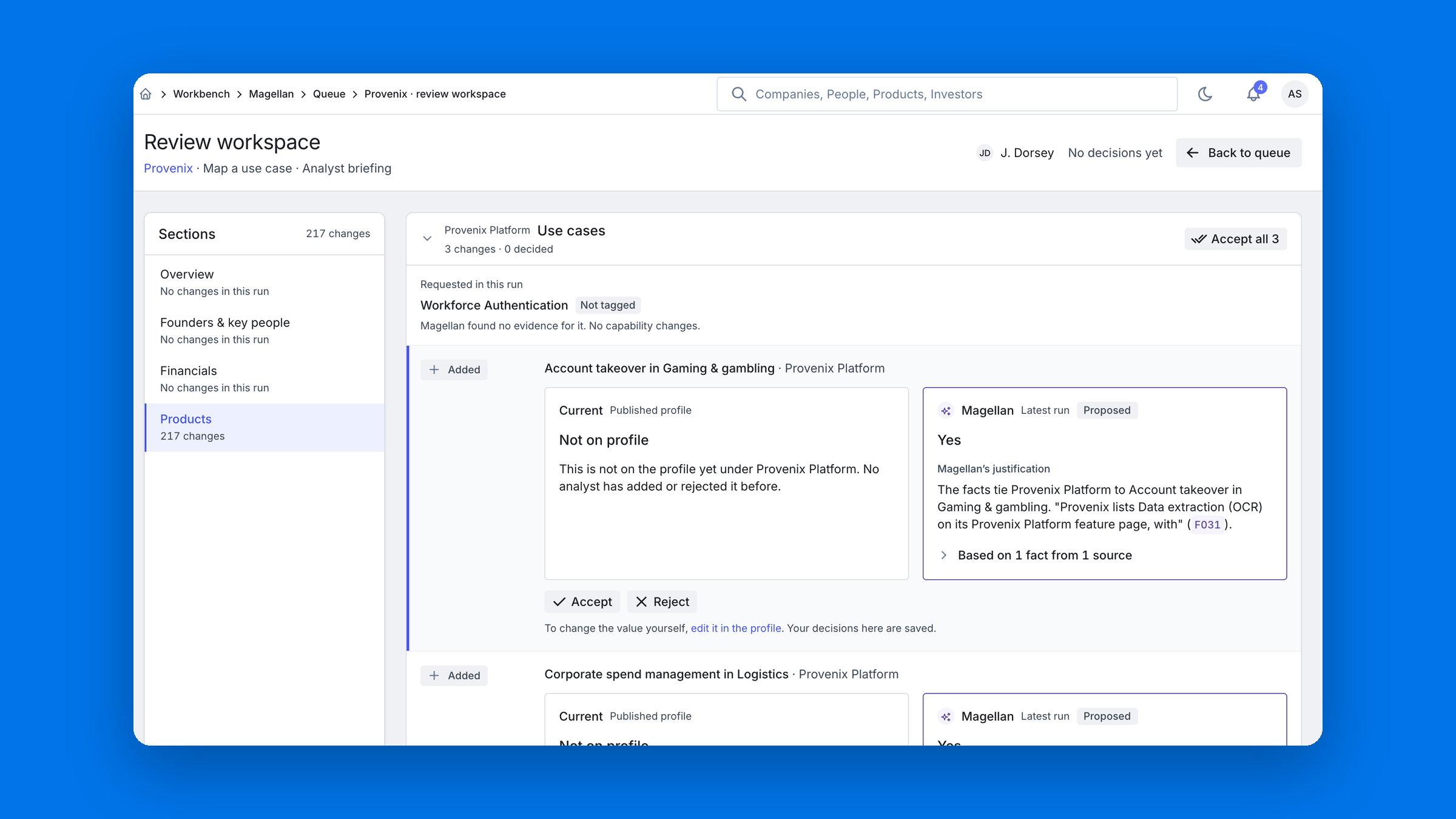
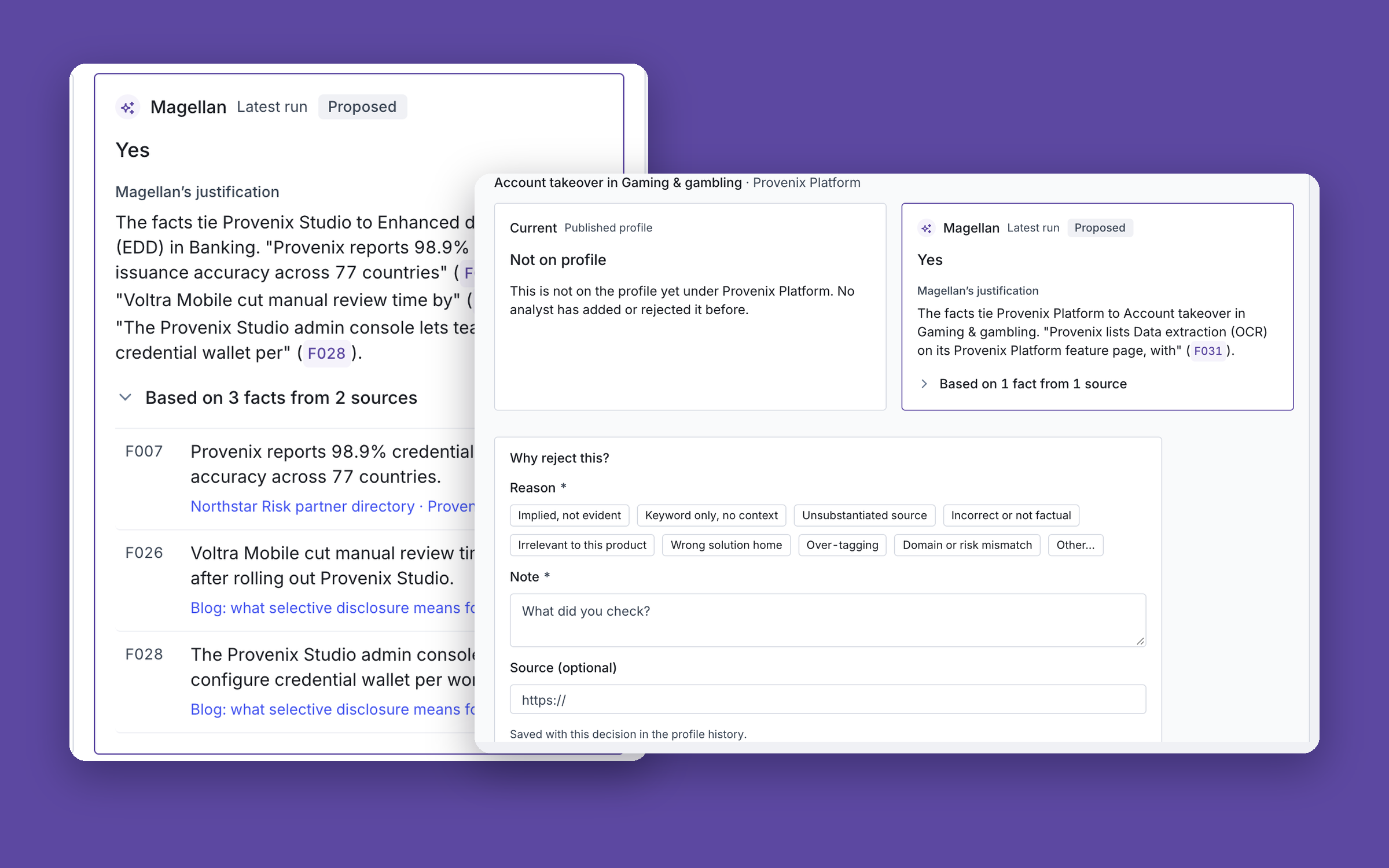
Analysts start a run, review every field the agent wants to change, handle update requests and publish with a quality check and a full history. We went from a whiteboard to a working prototype in about two weeks. I then turned the prototype into a React build on the real design system, which the developers used as the spec.
On the first real runs, the analyst team lead rated it 5.5 out of 7 and said they would switch from the old process. The lead then rewrote the team's research procedure around the new flow. V1 went live on 22 October.
Read the Magellan caseOn the first real runs, the analyst team lead rated it 5.5 out of 7 and said they would switch from the old process. The lead then rewrote the team's research procedure around the new flow. V1 went live on 22 October.
→ Atlas: from feedback to decisions in five days
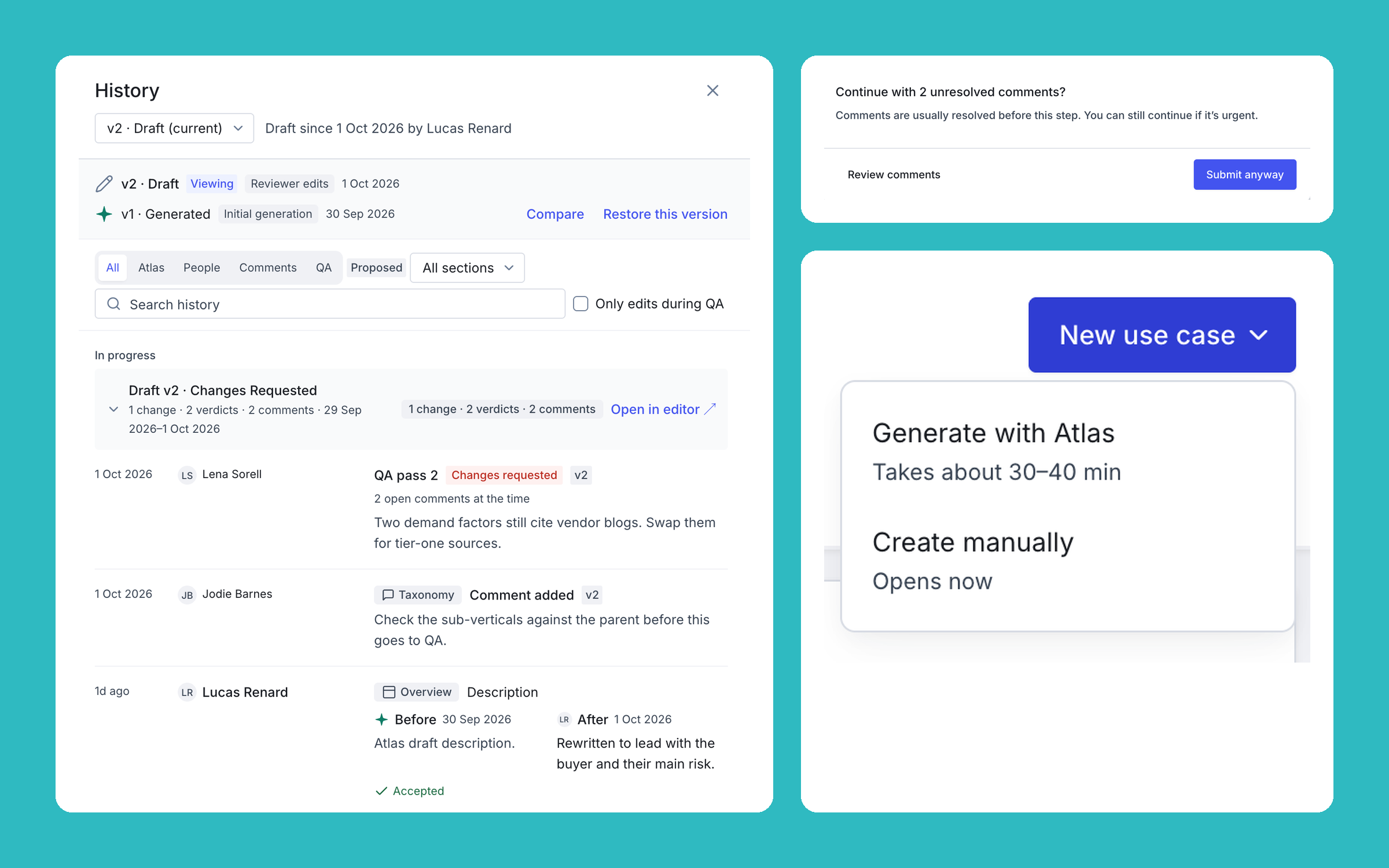
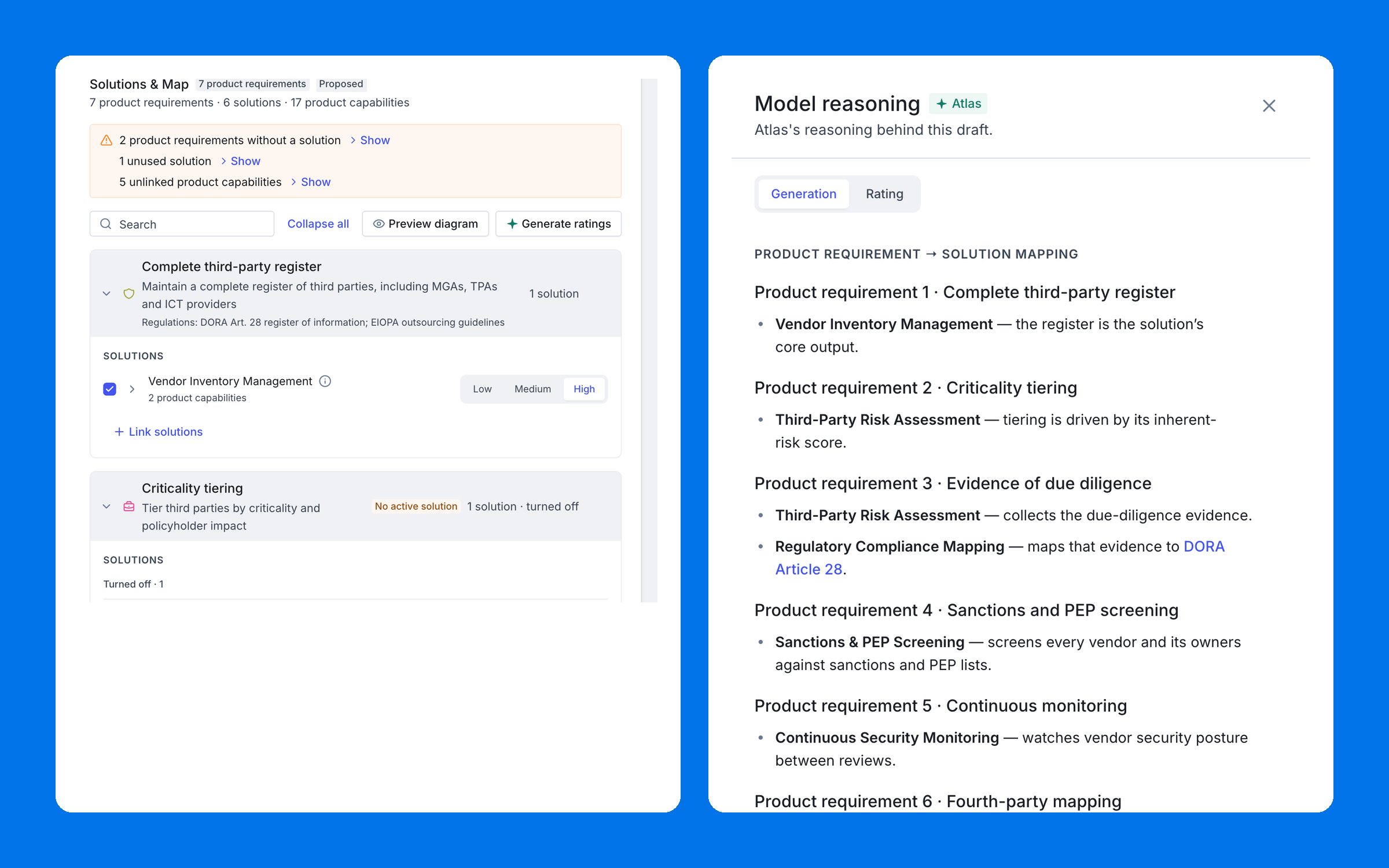
Atlas drafts use cases; analysts review, comment, approve and publish them. I specced the three release blockers that merged before launch. After launch, 23 pieces of analyst feedback and one walkthrough with the analyst lead became three batches of design changes in the prototype in five days, each explained with a before/after image so analysts and developers could review without reading code. Most of that work hadn’t reached production when I left.
Then I checked the design against the code and the tickets, row by row. Of 36 agreed changes, 24 had no ticket for the missing part. That list became the hand-off.
Read the Atlas caseThen I checked the design against the code and the tickets, row by row. Of 36 agreed changes, 24 had no ticket for the missing part. That list became the hand-off.
→ Day to day: smaller cases
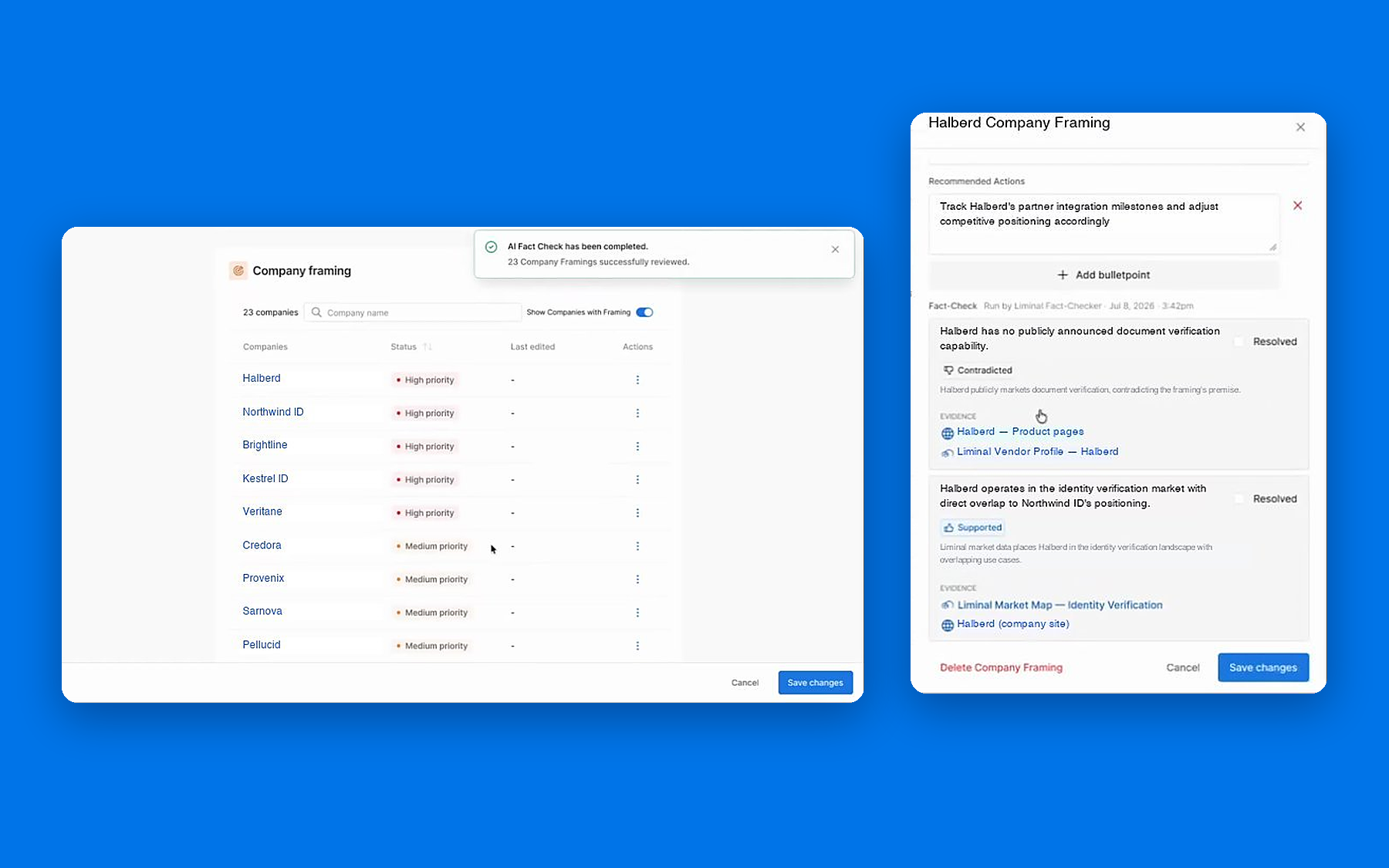
Company framing: an AI fact-checker analysts could sign off on. The squad’s PM left with work in flight, so I sorted their open tickets and picked up the AI fact-check for company framings. I turned a hackathon prototype into a review table sorted worst-first, where analysts run the check themselves and see the evidence behind every claim. It went live two weeks after my first prototype. What didn’t land: the verdicts still needed a training session with the analysts after launch.
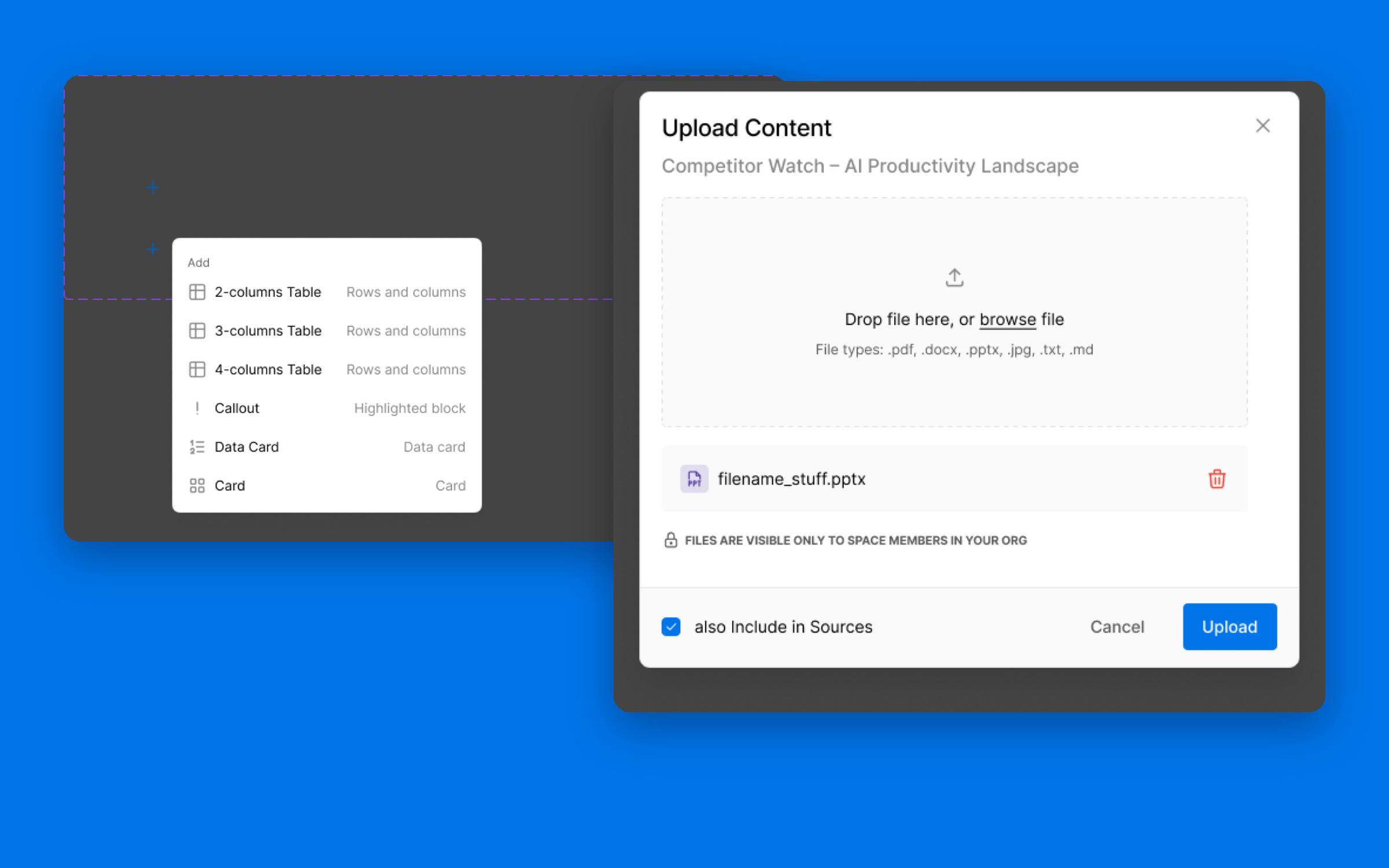
Custom uploads: where does a client's file belong? Clients kept emailing files to their analysts. I took two options for where uploads should live to my manager and a fellow designer, checked the approved spec against how shared client workspaces were really used, and added a line on data handling after a client worried about their own intel. When an enterprise client said their welcome post kept sinking, the fix was signed off ten days later.
Custom uploads: where does a client's file belong? Clients kept emailing files to their analysts. I took two options for where uploads should live to my manager and a fellow designer, checked the approved spec against how shared client workspaces were really used, and added a line on data handling after a client worried about their own intel. When an enterprise client said their welcome post kept sinking, the fix was signed off ten days later.
→ A new way of designing
Liminal's developers ship several times a day. A polished file that arrives late doesn't change what gets built. So I moved my practice into code.
Prototypes in Claude Design, one small change per prompt. 188 lettered prompts on Atlas in 24 days; 176 landed, each checked before the next.
Staging is the “as is”, the prototype the “to be”. Every new idea carried a “Proposed” tag behind one switch, so each change mapped straight onto a ticket.
AI checks AI. A design-system review skill and a headless check caught drift a human eye would miss.
Hand-offs as branches. Developers received working builds on the design system, not files to interpret.
→ Bonus: Liminal inside Claude and ChatGPT
Clients said Liminal data inside AI assistants was what kept them using the product. I audited all 92 connector tools and ran 43 measured test chats. One answer stacked a 5,000px chart nobody asked for.
In a small re-test of 8 questions, a single routing paragraph cut tool calls by 60–80% on the heaviest ones. I also set ten render rules for widgets, tested on a real phone. None of the experiments had run in production before I left.
In a small re-test of 8 questions, a single routing paragraph cut tool calls by 60–80% on the heaviest ones. I also set ten render rules for widgets, tested on a real phone. None of the experiments had run in production before I left.
→ Results
Magellan V1 went live on 22 October, about five weeks from the whiteboard, with a first user rating of 5.5 out of 7 and a clear “I would switch”. Atlas V1 went live the same day with the release blockers I specced, and post-launch feedback became design changes in five days.
188 design prompts, 176 of them verified, and 45 before/after callouts in three days. In the research on Liminal inside AI assistants, one routing paragraph cut tool calls by 60–80% in a small re-test.
188 design prompts, 176 of them verified, and 45 before/after callouts in three days. In the research on Liminal inside AI assistants, one routing paragraph cut tool calls by 60–80% in a small re-test.
“A great improvement from the first workflow demo.” — Analyst team lead, Liminal
What I learned: AI makes changes cheap, so checking them becomes the real work. Influence peaks when a ticket is born, not when a prototype is shown. And a prototype must say what is real.
→ What I’d do differently
Agree on the numbers before launch. Both tools went live, but we never set the usage numbers to watch, so I can’t yet show what changed for the analysts week to week.
Get the real users into every test. On Atlas, no analyst from the team that uses it daily joined the final test round. I’d book them before the date is fixed, not after.
Spend less time in the prototype, more in the tickets. My influence was highest when a ticket was being written. On Atlas, 24 agreed changes never got a ticket at all.
